Art history · time and matter
A history of Peruvian art
From early Pikimachay to contemporary languages from Ayacucho. Every available work is a present-day, made-to-order reinterpretation.
c. 12 000–6000 a.C. · Pacaycasa, Ayacucho
Pikimachay
Context of early human occupation; no specific artistic tradition is attributed to it.
- Visual language
- Early human context; no artistic tradition is attributed.
- Material and technique
- Archaeological evidence of occupation, not an art collection.
Historical contextMuseos del Perú
3000–1800 a.C. · Supe Valley
Caral
Ceremonial architecture, sunken plazas and urban organization.
- Visual language
- Monumentality, circular plazas and ceremonial organization.
- Material and technique
- Stone-and-earth architecture; plant fibers in shicra bags.
Explore Caral →Zona Arqueológica Caral
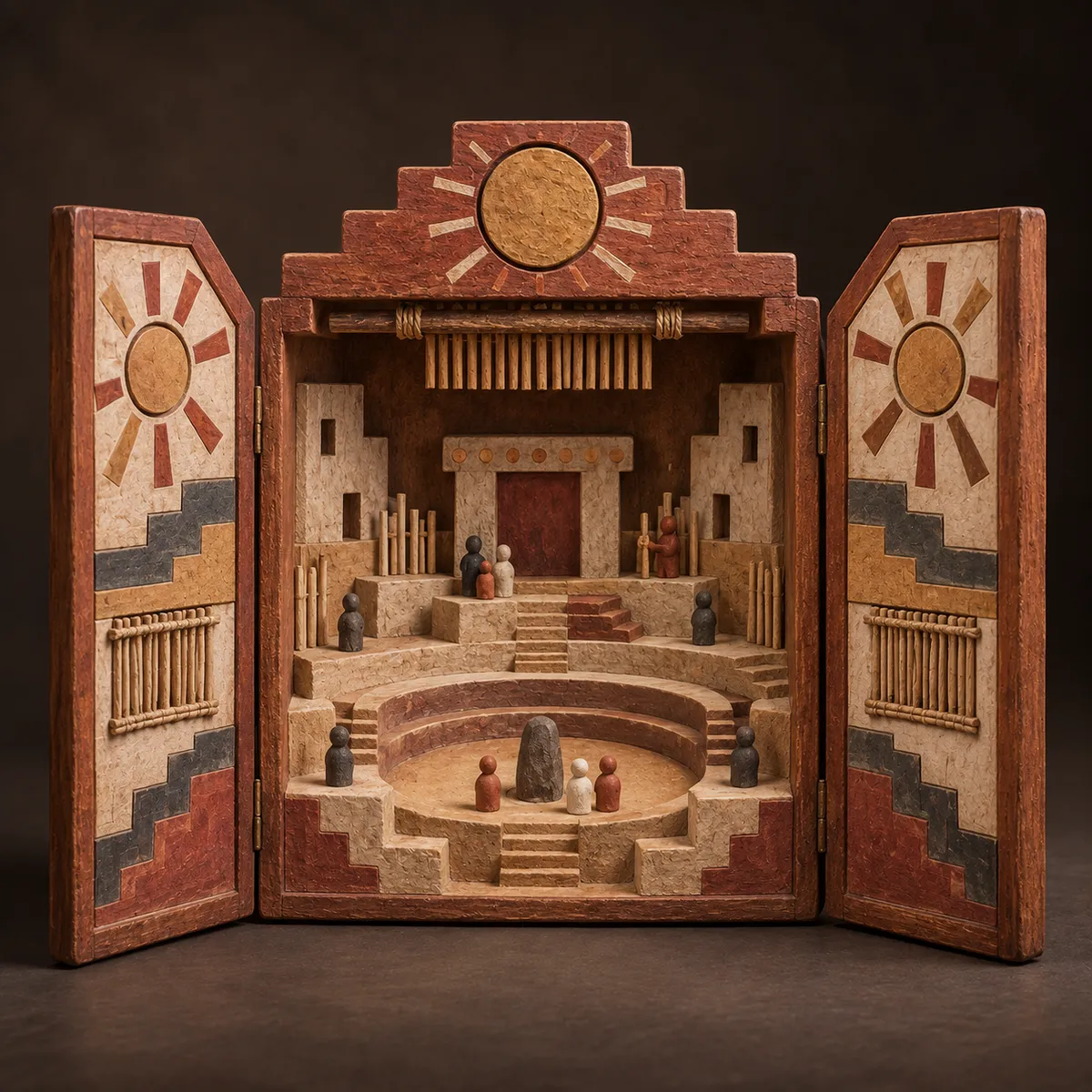 Retablo Arquitectura Sagrada de Caral
 1200–200 a.C. · Ancash and the central Andes
Chavín
Felines, serpents and birds articulate a ritual visual language.
- Visual language
- Feline transformation, birds, serpents and ritual symmetry.
- Material and technique
- Stone sculpture, ceramics and ceremonial architecture.
Explore Chavín →Museo Nacional Chavín
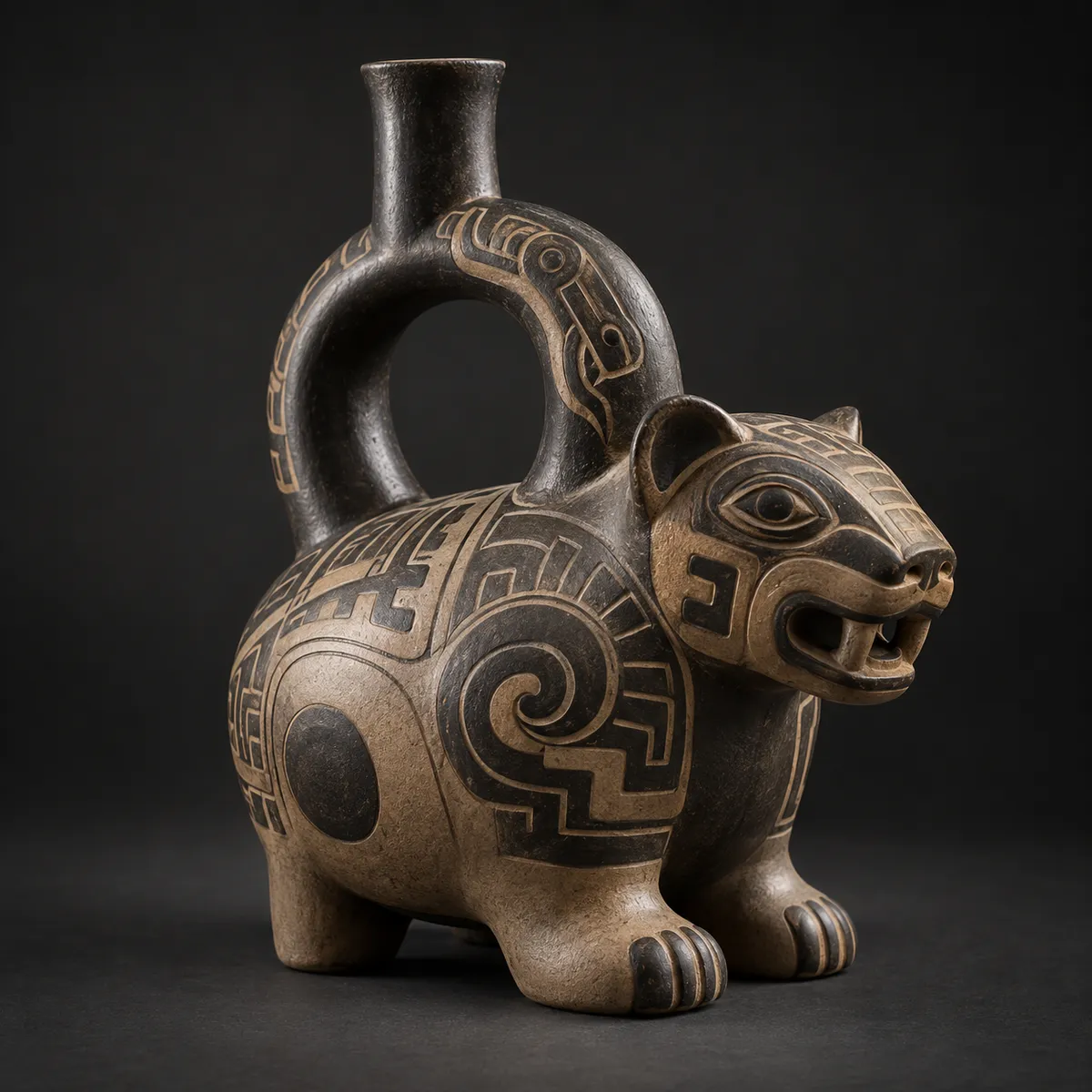 Vasija Felino y Serpiente Chavín
 800 a.C.–100 d.C. · South coast
Paracas
Textiles communicate rank, passage and worldview.
- Visual language
- Transforming beings, chromatic rhythm and enveloping narrative.
- Material and technique
- Dense embroidery, weaving and camelid fiber.
Explore Paracas →The Met · Andean Textiles
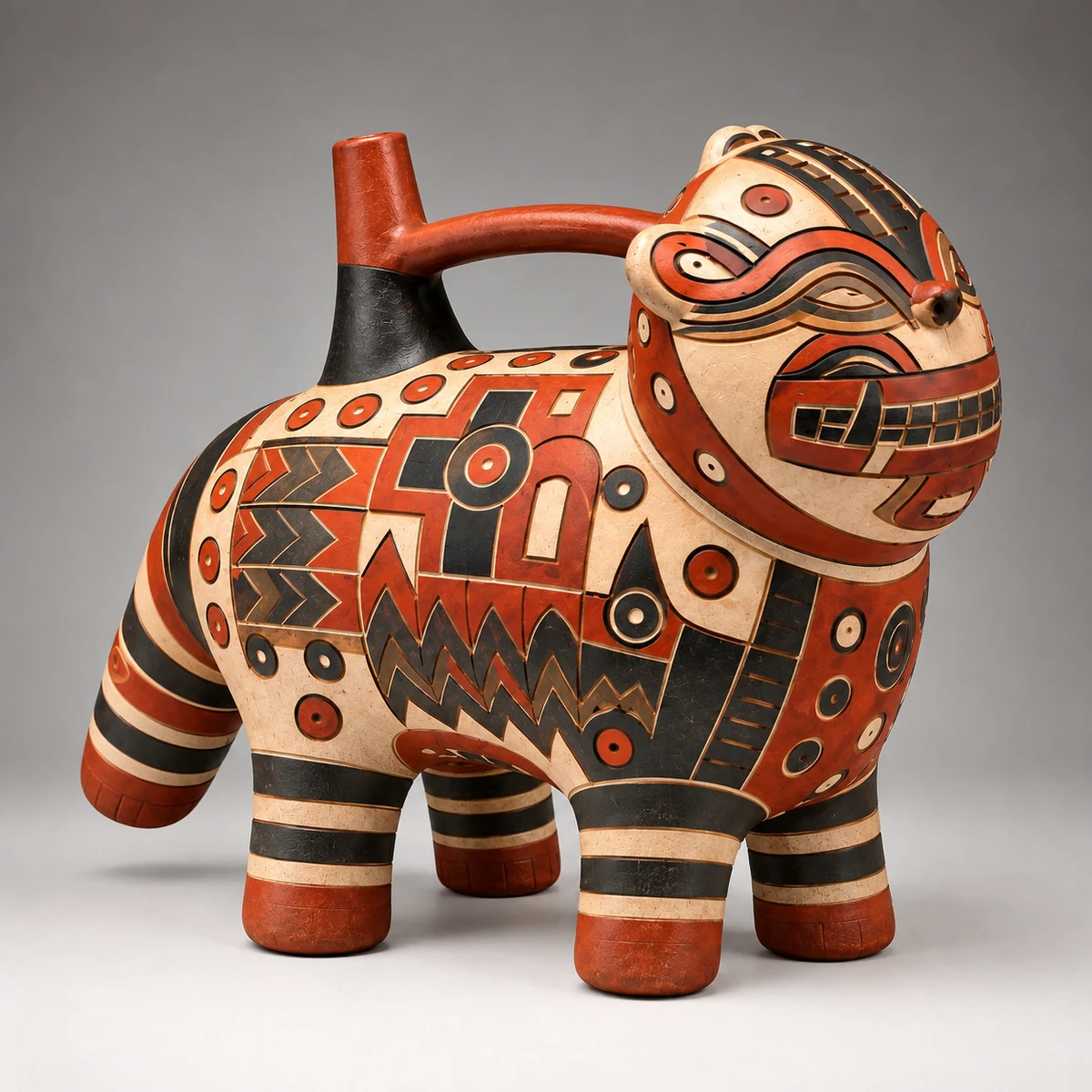 Botella Ceremonial Paracas Felino Sagrado Decoración Poscocción
 100 a.C.–800 d.C. · Ica valleys
Nazca
Polychrome ceramics and beings from the desert and sea.
- Visual language
- Polychromy, marine and winged beings, continuous lines.
- Material and technique
- Pre-fire painted ceramics and textiles.
Explore Nazca →Museo Larco · Colección
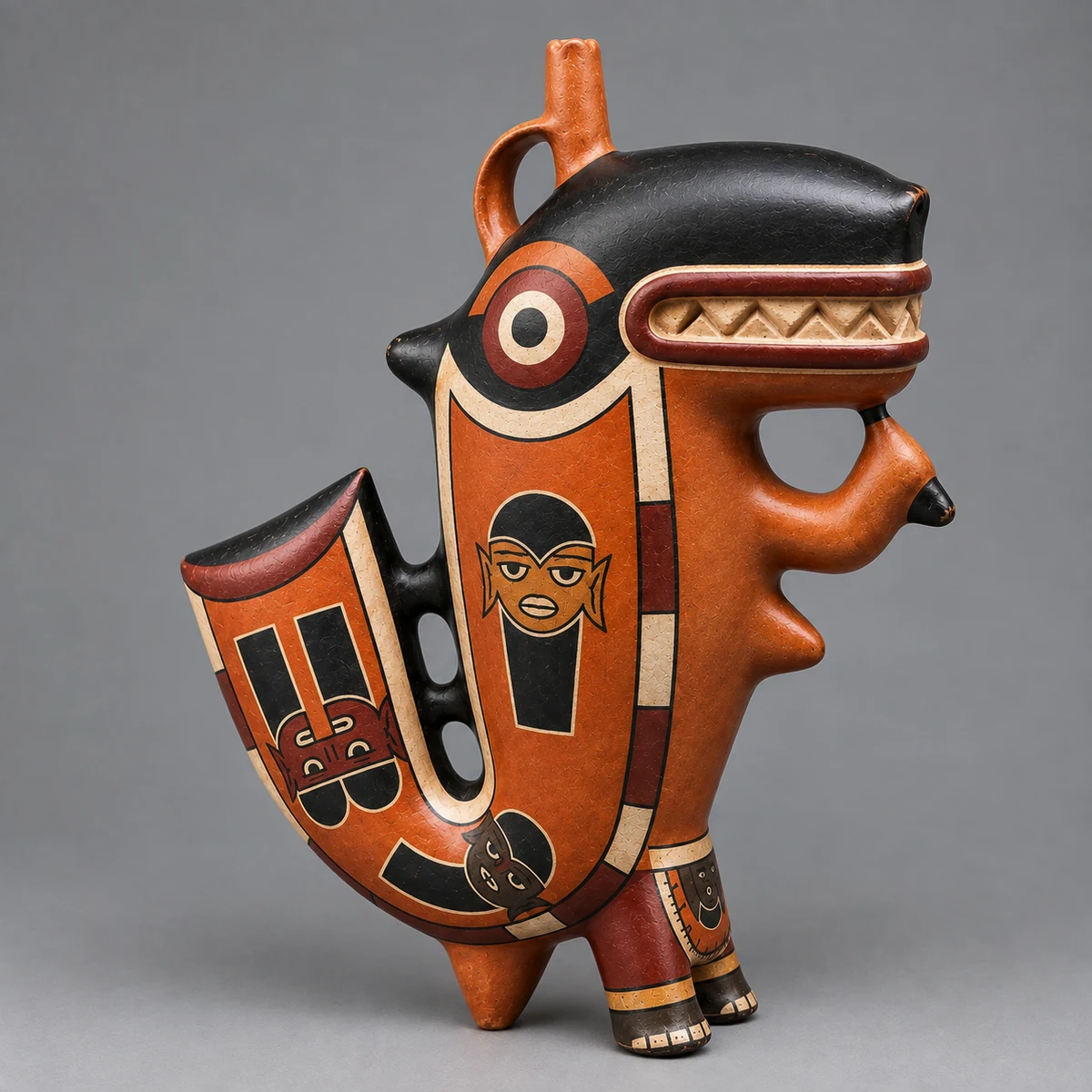 Vasija Ceremonial Nazca Deidad Alada Antropomorfa con Máscara Felina
 100–800 d.C. · North coast
Moche
Portraiture, narrative and sculptural mastery of clay.
- Visual language
- Portraiture, sculptural volume and narrative scenes.
- Material and technique
- Mold-made and modeled ceramics; metalwork.
Explore Moche →Museo Larco · Colección
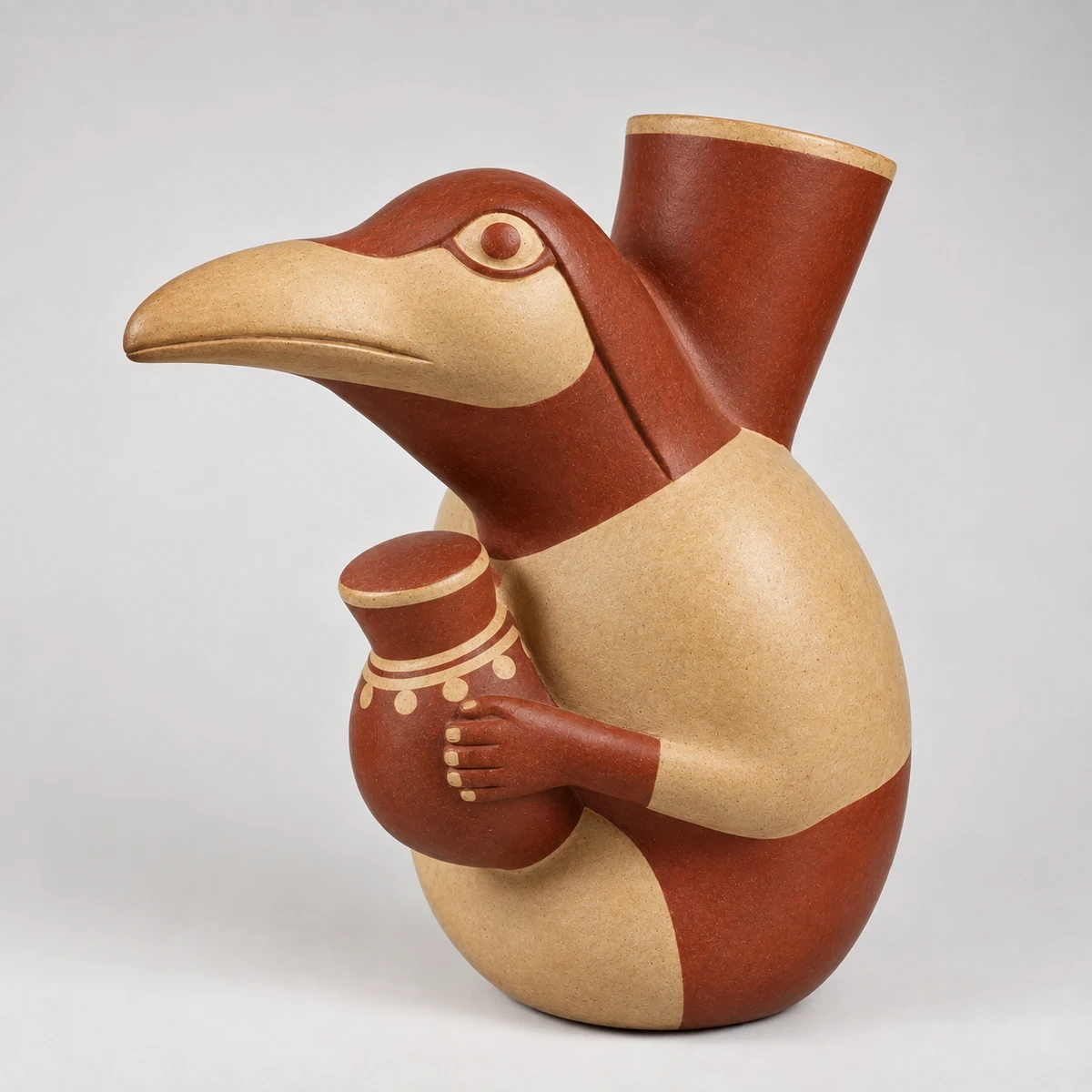 Botella Escultórica Mochica Asa Estribo Ave Nocturna Guardiana
 600–1000 d.C. · Ayacucho and the central Andes
Wari
Geometry, deities and the expansion of a pan-Andean visual language.
- Visual language
- Modular abstraction, profile beings and pan-Andean geometry.
- Material and technique
- Warp-and-weft tapestry and polychrome ceramics.
Explore Wari →The Met · Wari Imperial Art
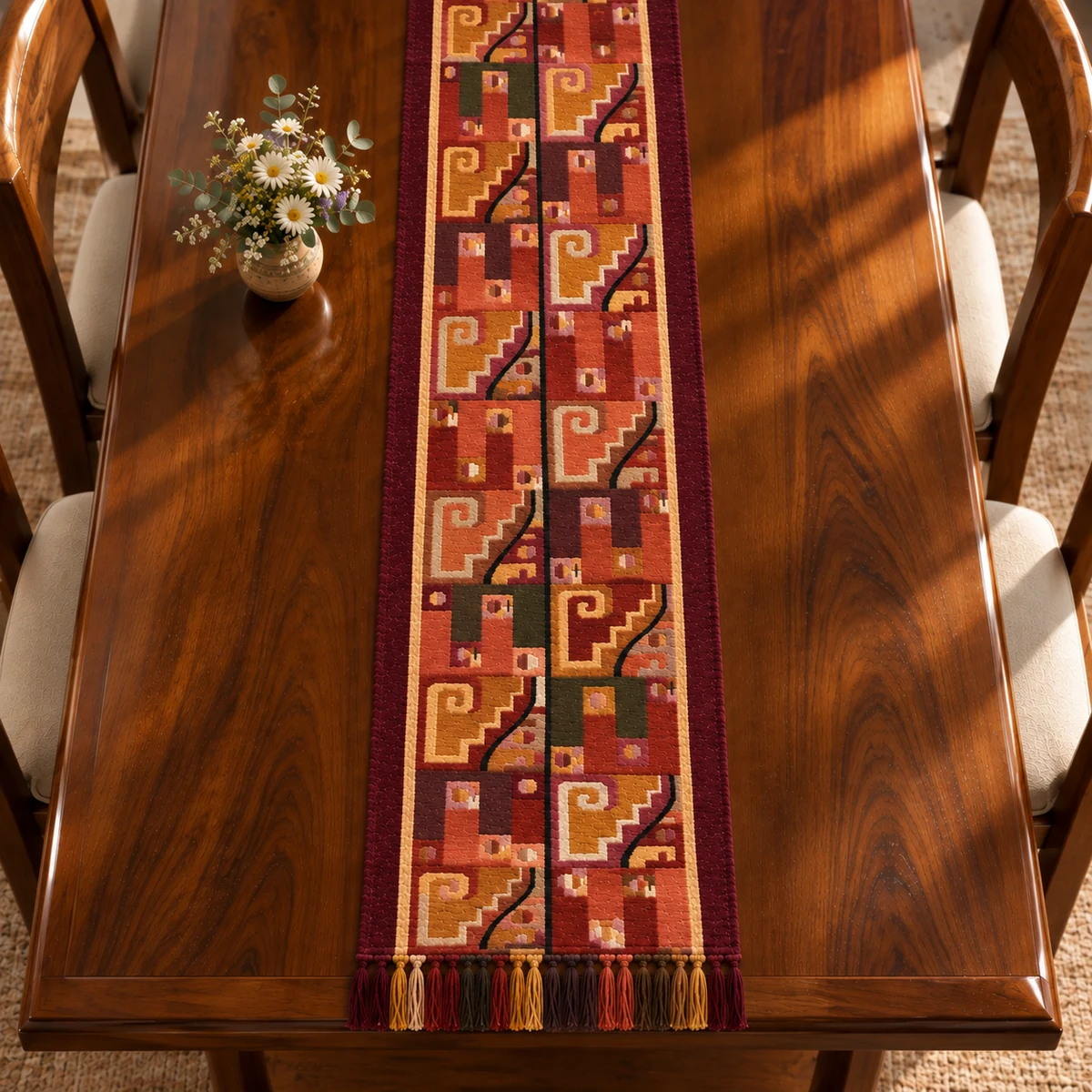 Camino de Mesa en Telar Tradicional con Grecas Geométricas Wari en Tonos Tierra
 900–1470 d.C. · North coast
Chimú
Black surfaces, repetition and marine memory.
- Visual language
- Modular repetition, marine fauna and black surfaces.
- Material and technique
- Reduction-fired ceramics, metal and earthen reliefs.
Explore Chimú →Museo Larco · Colección
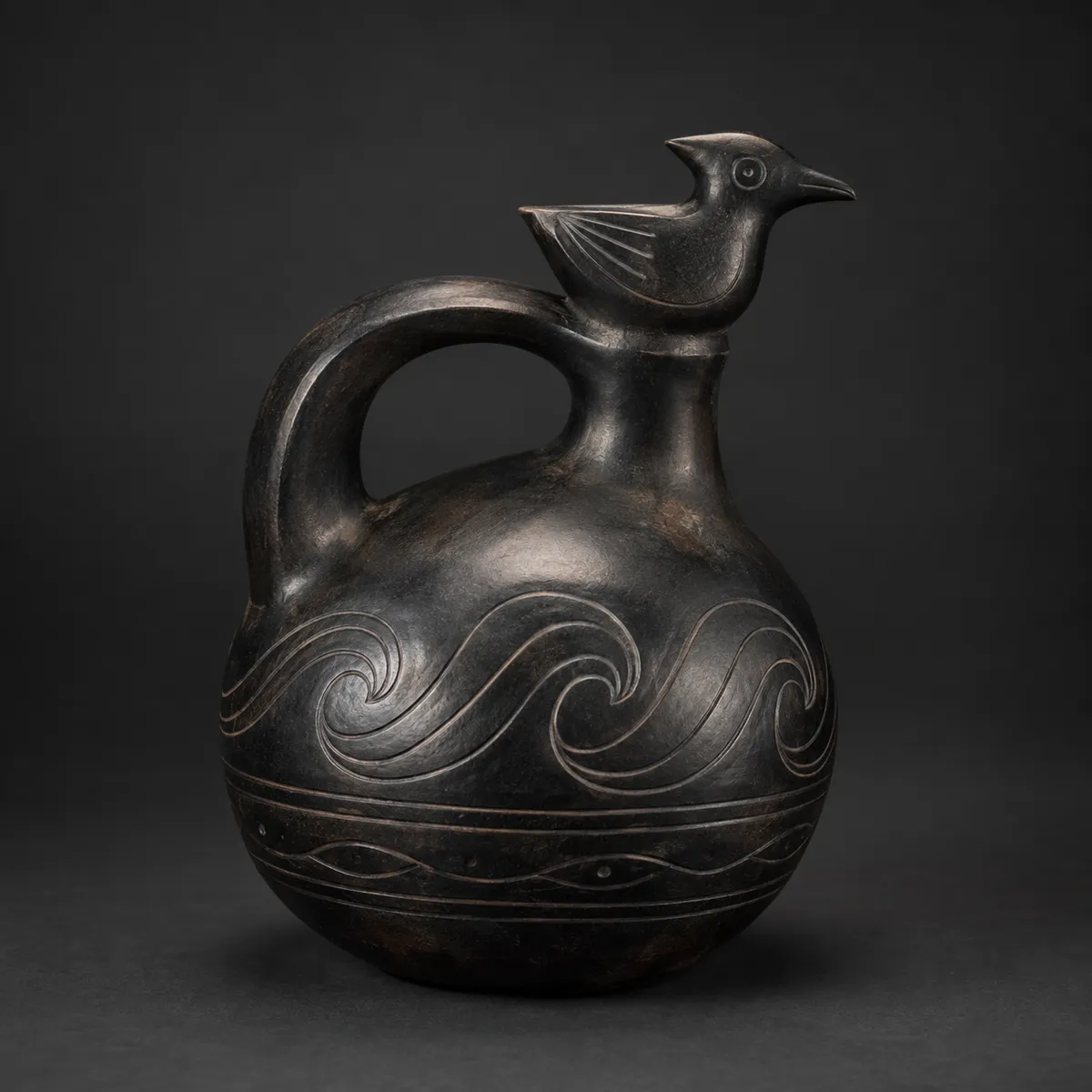 Vasija Luna y Mar Chimú
 1400–1532 d.C. · Tawantinsuyu
Inca
Geometric order, qeros and textiles as a language of state.
- Visual language
- Geometric order, color fields and visual hierarchy.
- Material and technique
- Cumbi cloth, qeros, fitted stone and metal.
Explore Inca →The Met · Andean Textiles
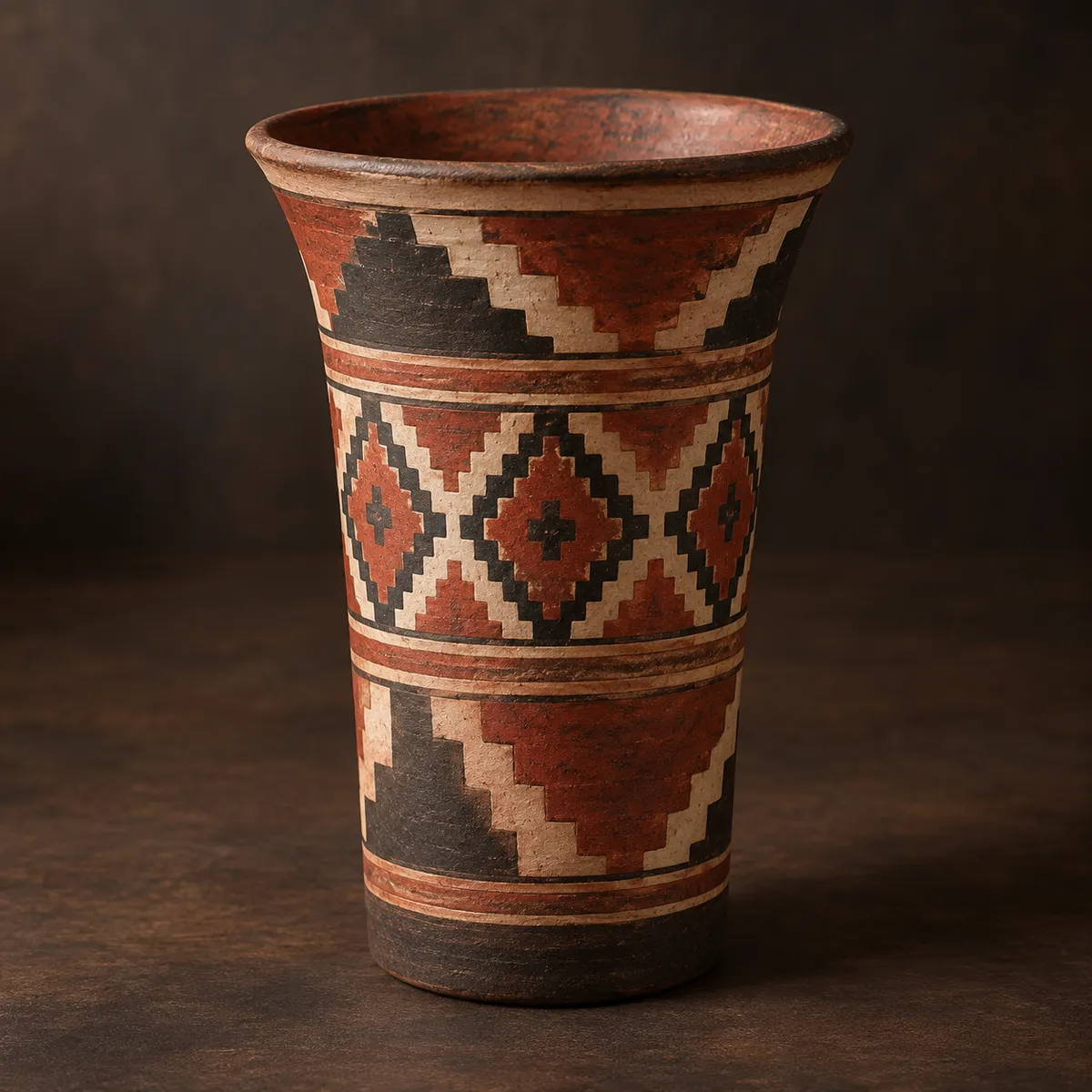 Qero Geometría del Tawantinsuyo
 1532–1821 · Viceroyalty of Peru
Viceregal encounter
Devotional imagery, Huamanga stone and faith reinterpreted by Andean hands.
- Visual language
- Devotion, floral ornament and Andean visual translation.
- Material and technique
- Huamanga stone, devotional imagery, carving and embroidery.
Explore Viceregal encounter →Museos del Perú
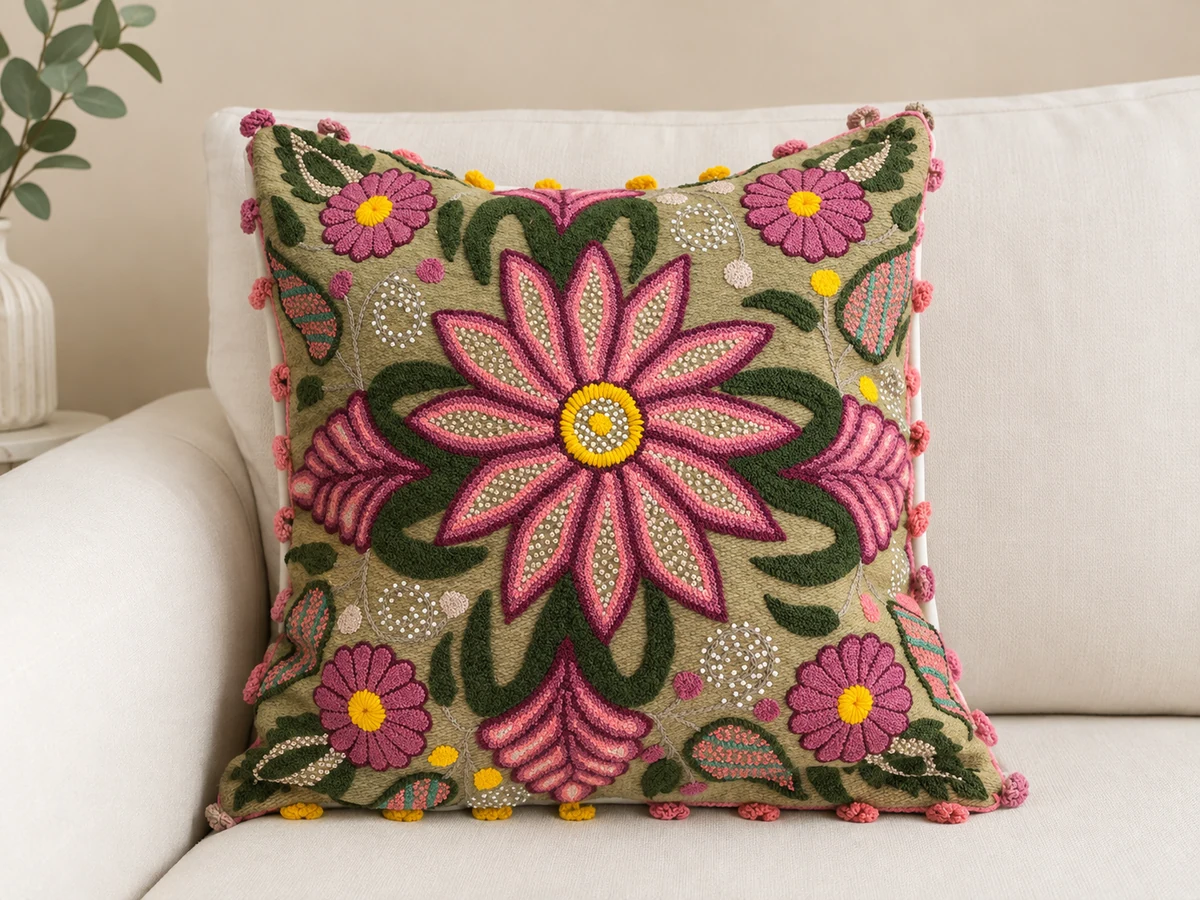 Cojín Bordado Simetría Virreinal Amarillo Oro y Bordado Blanco Nieve
 1821–1960 · Republican Ayacucho
Memory of everyday life
Trades, festivities and daily life consolidate the Ayacucho retablo.
- Visual language
- Everyday customs, trades, festivity and communal memory.
- Material and technique
- San Marcos boxes, modeled paste and folk carving.
Explore Memory of everyday life →Ministerio de Cultura · Retablo ayacuchano
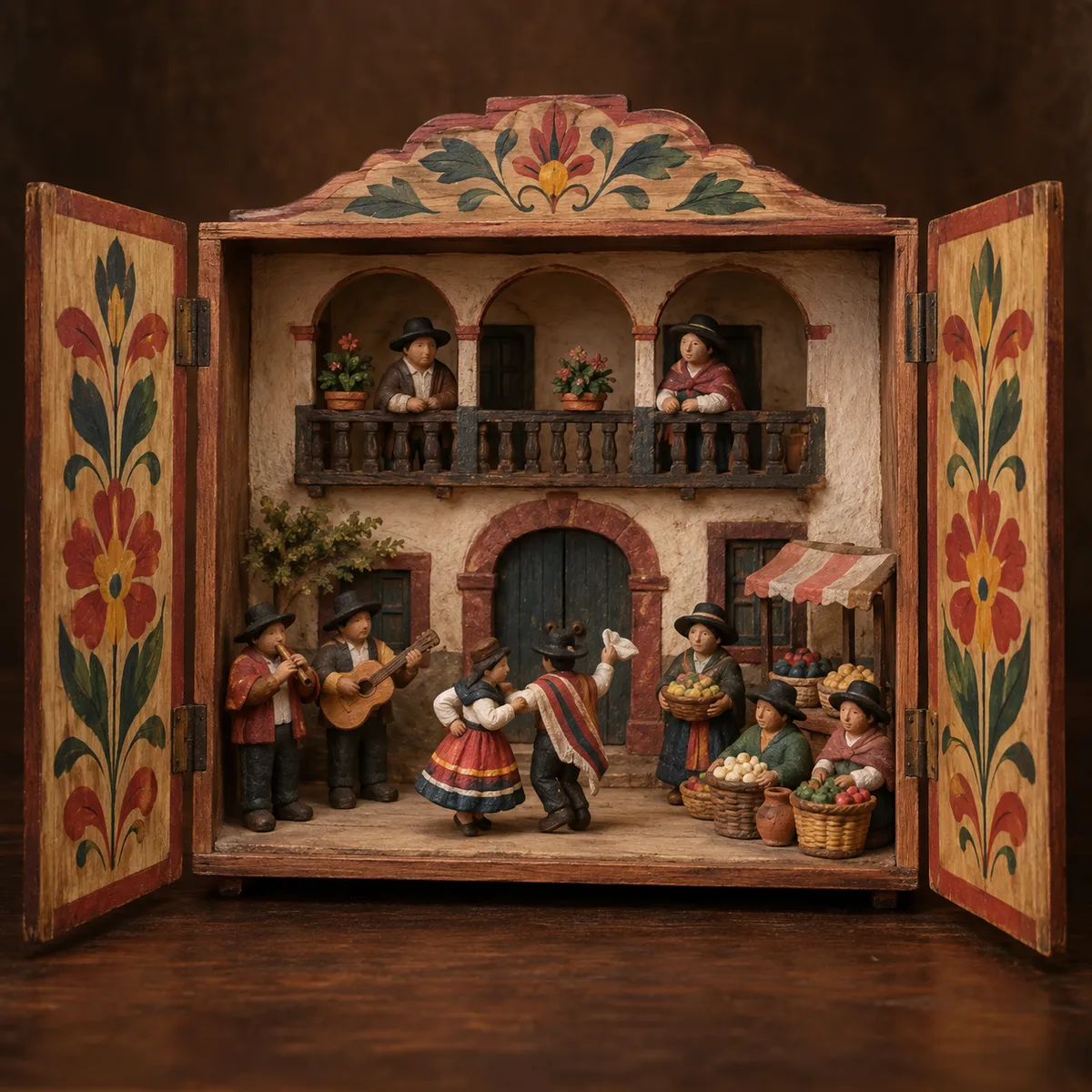 Retablo Plaza Republicana de Ayacucho
 1960–actualidad · Ayacucho and the world
Tradition in motion
Masters turn heritage, authorship and experimentation into living art.
- Visual language
- Authorship, synthesis, living memory and optical experimentation.
- Material and technique
- Weaving, embroidery, ceramics, retablo and contemporary sculpture.
Explore Tradition in motion →Ruraq Maki · Ministerio de Cultura
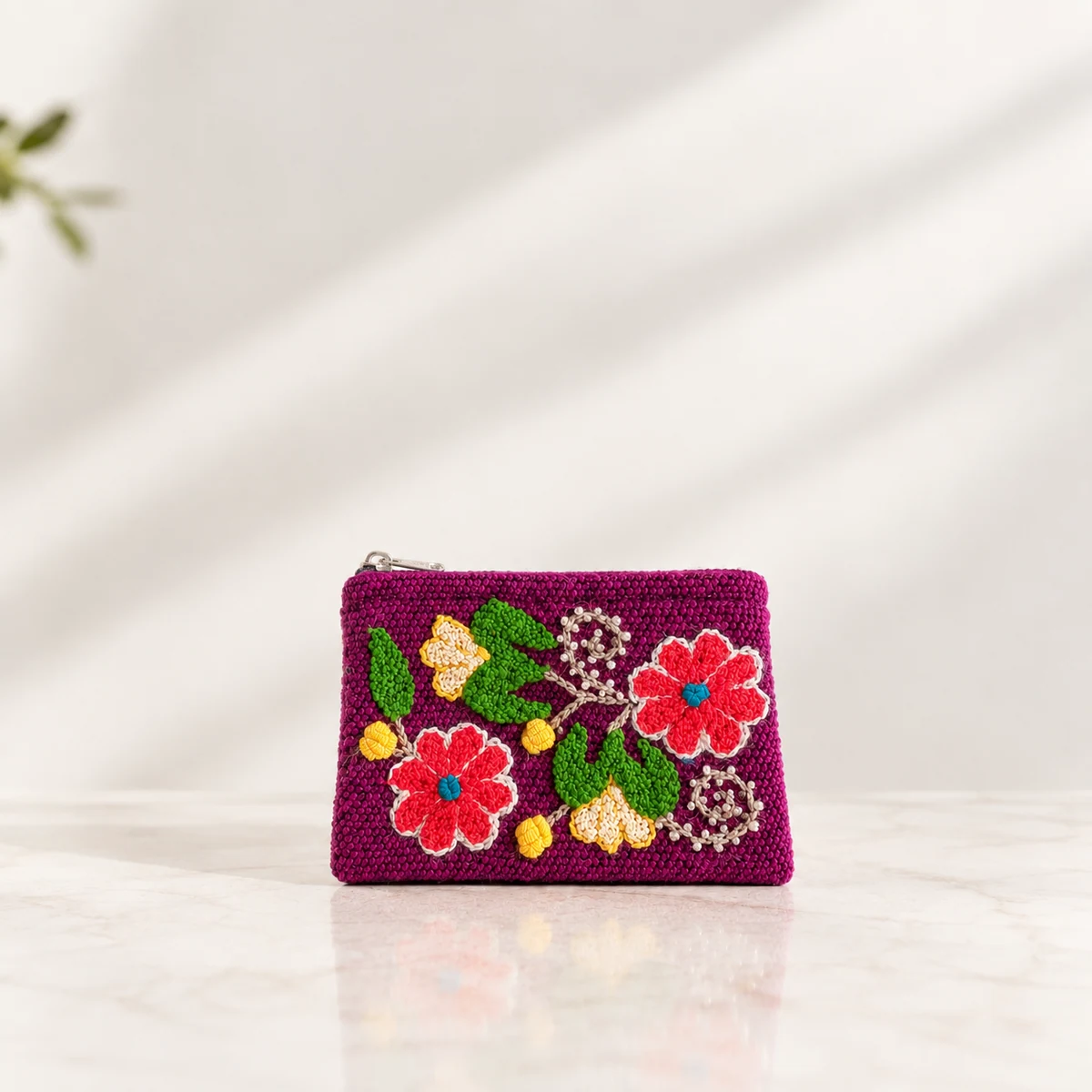 Monedero y Cartuchera Textil Bordada en Lana Morada con Flores en Relieve